

PLN BREAKTHROUGH: INDONESIAN CITIZENS CAN REGISTER LAND FROM 1 HECTARE FOR 100 GWp SOLAR PV & BESS PROJECT, MARET SAMUEL SUEKEN PUSHES ANTI-LAND MAFIA SAFEGUARDS
- account_circle radarekonomi
- calendar_month Jum, 23 Okt 2026
- visibility 58
- comment 0 komentar
PLN maps 1,015 connection points needing around 210,000 hectares across five regions; individual landowners, businesses, government and regional-owned enterprises can participate through the DPT Tanah mechanism
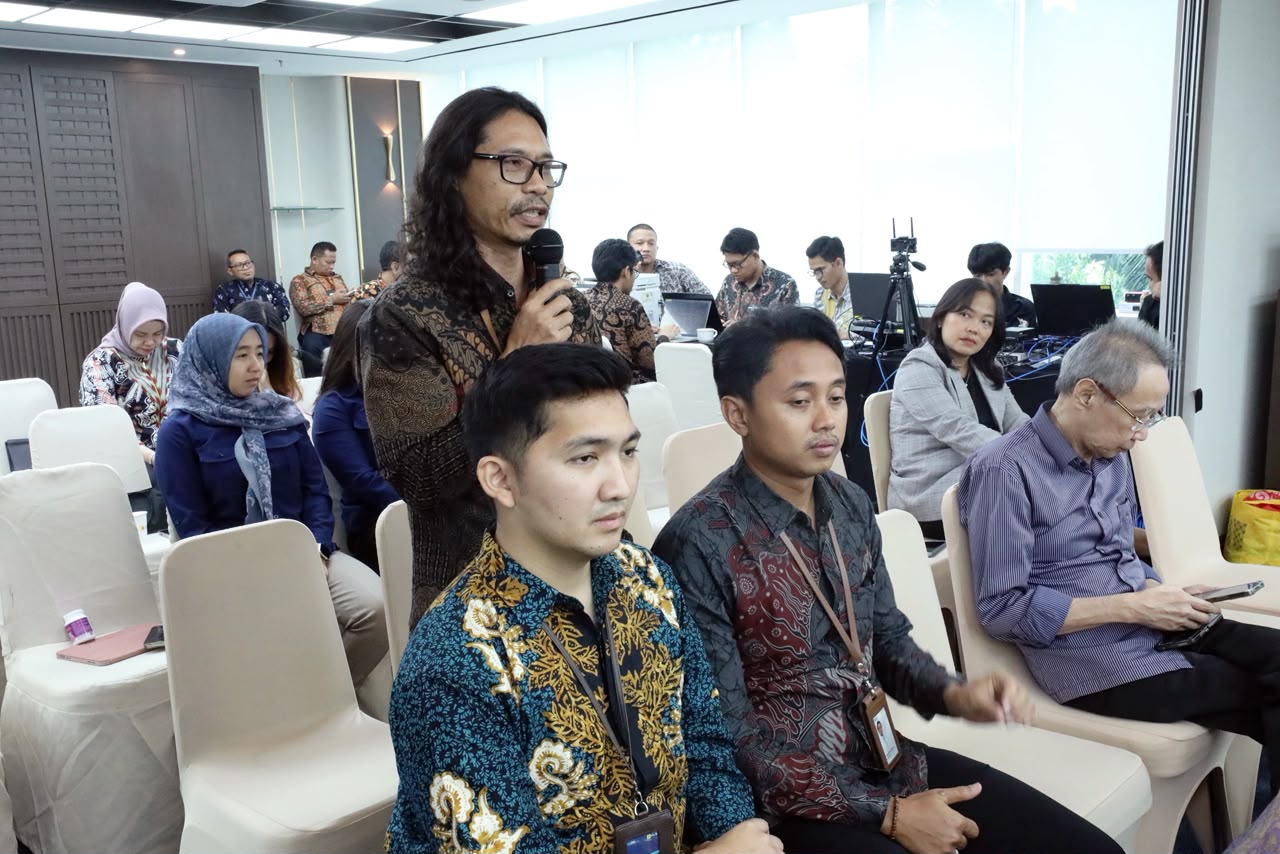
RadarEkonomi, JAKARTA, October 22, 2026, PT PLN (Persero) has launched a breakthrough in land provision to support national clean energy development through the Market Sounding for the Establishment of a Selected Land Provider List (DPT Tanah) for the 100 GWp Solar PV and/or Battery Energy Storage System (BESS) Program, held at PLN Headquarters, Jl. Trunojoyo, Jakarta, Thursday (10/22/2026).
This breakthrough opens opportunities for individual citizens, business entities, central and regional governments, state-owned enterprises (SOEs), regional-owned enterprises (ROEs), subsidiaries, and PLN Group to offer land they legally own or control through a screening and qualification mechanism.
Notably, individual landowners with as little as 1 hectare in a single contiguous plot can register, provided they meet the administrative, legal, spatial planning, and technical requirements set by PLN.
PLN Prepares National-Scale Land Needs
In PLN’s official presentation, the program is driven by the directive to develop 100 GWp of Solar PV and the need to accelerate energy infrastructure development until 2029.
The presentation outlines a Solar PV program of approximately 54.7 GWp plus 154 GWh of BESS, including distributed Solar PV development. PLN identified land provision certainty as a critical bottleneck that can create uncertainty for developers.
To address this, PLN established DPT Tanah so that prospective project locations can be identified and qualified early.
The scale is significant.
Based on the mapping presented, there are 1,015 location/connection points in five regions, with an estimated land requirement of approximately 210,474 hectares.
The breakdown includes Java-Madura-Bali with 485 points requiring around 107,085.6 hectares; Sumatra 221 points or 67,724 hectares; Kalimantan 103 points or 17,931 hectares; Sulawesi 110 points or 13,892.5 hectares; and Maluku-Papua-Nusa Tenggara 96 points or 3,841 hectares.
This figure is an estimated land requirement from PLN’s presentation, not the area of land already acquired or designated for construction.
Citizens Do Not Have to Sell Their Land
One of the positive values of DPT Tanah is the availability of land utilization alternatives other than sale.
Under the scheme explained by PLN, landowners who are included in the DPT can cooperate with selected Solar PV developers through lease, land contribution as equity (inbreng), lending-use, or other mutually agreed mechanisms.
PLN acts as the off-taker or purchaser of electricity from developers through a Power Purchase Agreement (PPA) mechanism.
Thus, DPT Tanah is not a mechanism for direct purchase of all land by PLN. Landowners and developers still need to agree on the form of utilization, transaction value, rights, and obligations.
Landowners who meet the requirements can also participate in procurement as Solar PV developers, as long as they meet the applicable developer procurement provisions.
CFK Commissioner Represents KLKT, Urges Prevention of Land Mafia.
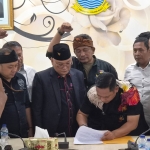
At the event, Maret Samuel Sueken, Commissioner of PT Cahaya Fajar Kaltim (CFK), was present representing PT Ketenagalistrikan Kalimantan Timur (Perseroda) or KLKT based on KLKT President Director Assignment Letter Number 03/ST/KLKT/X/2026.
Sueken was also given the opportunity to express his views directly before the participants.
He considered the opening of registration access to the wider community as a positive step that has the potential to reduce landowners’ dependence on unnecessary intermediaries.
In his view, the DPT Tanah mechanism should be utilized to strengthen protection for legitimate landowners while narrowing the space for land mafia practices.
Sueken highlighted the importance of verifying the identity of registrants, ownership or control documents, boundaries and location of land parcels, dispute status, and ensuring that the party offering the land truly has legitimate authority.
According to him, process transparency must go hand in hand with community protection so that the acceleration of energy investment is not exploited for document forgery, brokering, baseless land claims, or misuse of project information.
His key message is that clean energy development must benefit the people without sacrificing legal certainty and land rights.
Verification and Due Diligence Before Entering DPT
PLN has included a number of controls in the DPT Tanah qualification requirements.
Participants must submit proof of legitimate ownership or control of land, information on location and boundaries, a statement regarding land status, and willingness to undergo examination or due diligence.
Requirements also include land free from disputes, seizures, or blocks, spatial planning suitability, and technical provisions regarding minimum area and land conditions.
Examination may include document verification, land status, spatial planning, and site surveys if required.
For land within forest areas, there are requirements related to Forest Area Use Approval (PPKH) or other documents as explained in PLN’s FAQ.
These provisions are an important part of efforts to build certainty in land provision. Nevertheless, the effectiveness of preventing land mafia still requires independent examination, coordination with land agencies, and a mechanism for handling objections if conflicting claims are found.
Registration is Free of Charge
PLN emphasized that DPT Tanah registration is free of charge by PLN. However, costs required for participants to prepare documents and meet requirements are the responsibility of each participant.
For individuals and business entities, registration is done through the Vendor Management System (VMS) and PLN e-Proc.
Meanwhile, government, SOEs, ROEs, SOE/ROE subsidiaries, and PLN Group use the channel of submitting application letters and qualification documents to the relevant PLN unit.
Based on the schedule presented at the event, registration and document submission will last until October 29, 2026, while the determination and announcement of DPT Tanah participants is scheduled for October 30, 2026.
Participants whose documents need correction are given the opportunity to complete the requirements during the registration period. Participants who do not pass can also participate in the next opportunity if PLN opens an extension according to project needs.
Early Interest is Visible
PLN’s presentation noted that as of October 21, 2026 at 11.00 WIB, there were 31 registrants, consisting of 29 business entities and two individuals.
Of this number, 20 participants have registered in VMS, 12 have been VMS verified, and six have reached the e-Proc registration stage.
Nine participants who have listed their land area are offering a total of around 4,557 hectares.
This figure is an initial development of the registration process, not the number of participants who have been declared passed or the amount of land that is confirmed to be used for the project.
DPT Tanah Supports Energy Development and Fuel Reduction
In PLN’s official FAQ, DPT Tanah is also linked to the Quick Win Fuel Elimination program, system strengthening, acceleration of Commercial Operation Date (COD) in the RUPTL, and development of distributed Solar PV.
Solar PV generates electricity from solar energy, while BESS enables energy storage to help manage supply and system needs.
Project locations need to consider proximity to PLN networks or substations, but interconnection still depends on technical studies and network capability.
Thus, the DPT Tanah program is not only related to land administration, but also becomes one of the foundations for accelerating investment, strengthening the electricity system, and developing clean energy.
Kalimantan Has Great Opportunities
For KLKT, this activity opens up opportunities to learn about the involvement of ROEs in land provision and development of energy cooperation in East Kalimantan.
The Kalimantan region itself is recorded as having 103 location points or connection points with an estimated land requirement of 17,931 hectares.
This potential can be followed up through identification of suitable land, cooperation with legitimate landowners, coordination with local governments, and exploration of partnerships with developers.
ROE involvement is expected to encourage regional economic benefits, as long as each cooperation complies with legal provisions, governance, and business feasibility.
A Positive Breakthrough That Must Be Guarded Together
DPT Tanah is a promising first step to bring together the needs of energy infrastructure development with the land potential of the community and various institutions.
Open access, qualification processes, document examination, and separation between selection of land providers and selection of developers can be the foundation for better governance of land procurement.
However, the public still needs to understand that being registered in the DPT Tanah does not automatically guarantee that their land will be used, leased, purchased, or generate income. Its utilization still depends on project needs, developer selection, examination results, and cooperation agreements.
Going forward, the implementation of DPT Tanah is expected to continue to be improved by strengthening transparency, supervision, personal data protection, community objection mechanisms, and coordination with land agencies.
National energy breakthroughs must become economic opportunities for the people, not new opportunities for the land mafia. The people’s land must be protected, investment must have legal certainty, and clean energy development must provide the widest possible benefits for Indonesia.
Reporter : Titiek
- Penulis: radarekonomi












Saat ini belum ada komentar